
Skincare purchasing runs on hope, but yours doesn’t have to.
Stop riding the trial-and-error cycle powered by your credit card, and quietly mustered hope.
Start buying as an equal in every room that sells.

Est. 2015 · Gahanna, Ohio
Come join the empty bottle gang.
The empty bottle phenomenon started in a treatment room in Gahanna, Ohio, in 2015 — clients whose bottles got finished, then repurchased, because they were right for the skin they were actually in. It’s still thriving today.

Most cabinets never qualify. Here’s why.
You keep asking about your skin. The industry keeps answering with a product.
Real questions, about a living organ. And every answer, every time: something to buy. There are well over a million for sale right now — and not one of them is an answer about your skin. A product can’t know your skin. It was formulated years before you walked in.
Which is how the product graveyard grows: the one you never opened, the one that worked and then stopped, the one Sally swore by that turned you oily. Good products, buried — because nobody asked about your skin first.
You bought every one of them to answer the same question. You still have the question.
The method, in a nutshell
Your skin is hardwired for a job it couldn’t abandon if it tried.
Barrier. Defense. Repair. The primary functions run first, always — your skin will complete them whether you fund them or not.
And everything you actually shop for — firmness, glow, even tone — is secondary work. It only gets prioritized once the primary work is paid for.
So, join us in the empty bottle gang?
We give the skin what it needs — and it gives us what we want.
Beautiful, vital, healthy skin. As nature intended.

That’s the whole method. The rest is reading your skin’s actual day to learn what “needs” means for you.
It’s also why everything changes after 40: the hardwired workload grows while the spare capacity shrinks. Your products didn’t stop working — the budget got reallocated. Needs-first stops being optional and becomes the only math that works.
One more thing worth knowing
No brand is allowed to do this reading for you. The moment a cosmetic argues about how your skin functions, it legally becomes a drug — so the reading has to come from someone with nothing to sell.

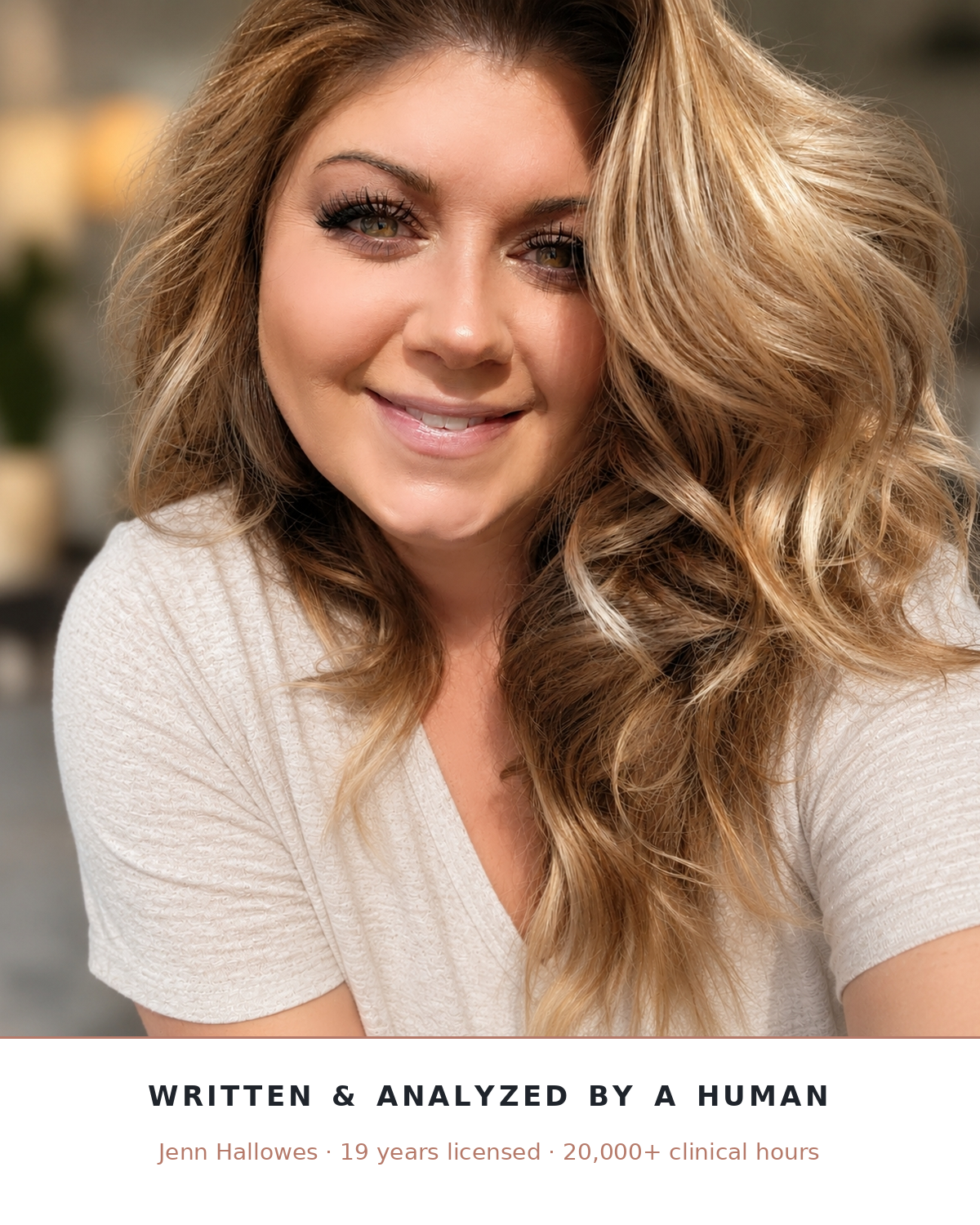
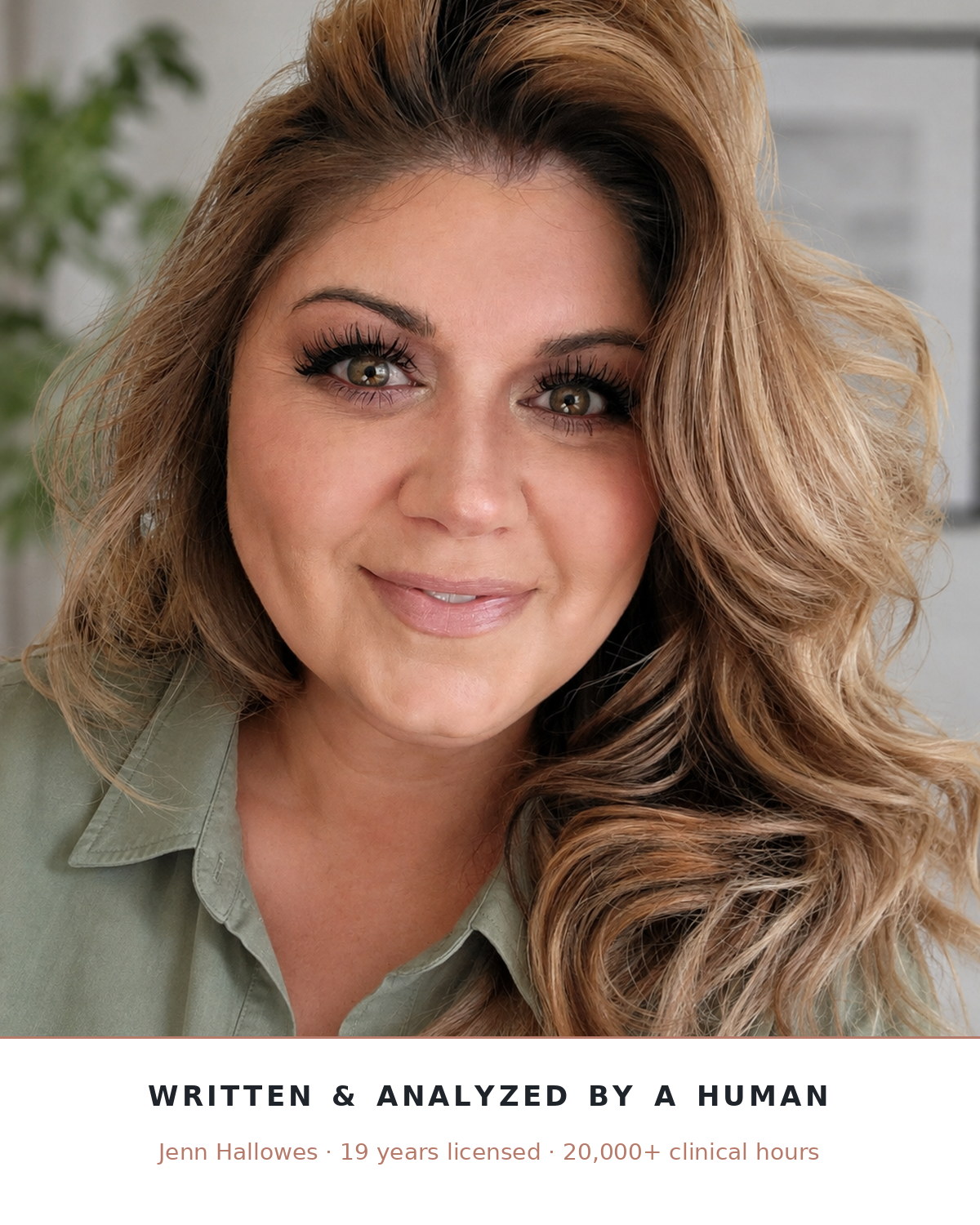
Hey there, I'm Jenn.
Who's reading your skin
Nineteen years licensed. Ten of them with my hands on people's skin, one person at a time. My business ran on my word — and my clients' bottles got finished and repurchased. Nobody had a drawer.
Waxing, a haircut, a facial — I could tell you exactly what you'd get. Product recommendations were the one place I couldn't. Same advice, two people, two different results, and no honest explanation for either. Everyone's skin is different, they said. True — and not an answer.
Before I opened my own business I was a strategist for a pharmaceutical agency, reading clinical studies and translating mechanism of action for physicians. I knew what a real answer looks like.
And I have never been able to accept the thing that doesn’t work. I live inside questions — turning them over, chasing them down, refusing the non-answer. So I sold my house, closed my business, and spent 4,200 hours in a guest house in Montana, immersed in the problem until solutions arose: how the industry is built, how far its advice lags the science, and how skin decides which products it receives or ignores.
Truth requires itself to be earned.
Which means I am free to tell you the one you already own is fine.
Proof Positive Skin Care™ is built on a deliberate constraint: it sells no products and no treatments — only understanding. What I build instead are exit ramps out of the trial and error cycle — hopeLESS skin care.
Welcome in.
The whole method →That's what they said
From inside the gang.
Laurel R.
"Answers about my skin that don't involve a product is a totally novel thing. Thanks for being the real deal."
Kale V.
"Even for a guy like me who doesn't care about skin, I'm fascinated. I would go door to door to say, listen — you want to do this. Trust me, there's something here."
Shellie P.
"I've always felt like I was in the capable hands of a trusted friend, and that level of trust is invaluable when it comes to skincare."
Robyn G.
"I use a lot of Ordinary brand peptides and was happy to learn that those ingredients line up. Thanks for this experience."
"My body was buzzing reading it, because I was focusing on my skin like she was saying those words to me. I realized that even though I spread love around me, I don't talk nicely to my skin the same way. I DO criticize her, blame her, feel sad she's changing — this has been my default mode for 46 years. But this stops now."
Luciana R. · on hearing her skin's side of it
Ways to work with me
Which exit ramp will you take?
The way out of the trial and error cycle is to make you an equal in every room that sells.
Every offer below is guaranteed — in writing, on its page.







The book · Why Didn’t It Work?
If this product works so well, why didn’t it work for me?
We’ve been taught to think of skincare as a simple equation: find the right ingredient, apply it consistently, and get the promised result. When that doesn’t happen, we blame the product, our skin, or ourselves — then move on to the next thing. The cycle keeps us buying, trying, switching, and hoping.
Inside Why Didn’t It Work?, Jenn Hallowes examines what gets left out of that equation: context. Skin is living biology, operating within everything else happening in the body and the environment around it. An ingredient can be well researched, a product beautifully formulated, the science sound — and the outcome still varies from person to person. This book explores why, and what changes when we stop asking only “What should I put on my skin?” and start asking a more useful question: “What does my skin need right now?”
An invitation to step out of the trial-and-error cycle and see skincare differently. Ingredients don’t fail. Context does. The first ten chapters are published here in full — no gate, no email — and the book is in preorder now.
We're not a skincare company.
We're a skin care company. Two words.
Care — for an organ that has been working for you every single day of your life, and has never once been asked what it needed.
Questions we hear all the time.
And answers that are actually worth reading.
Why isn't my skin care working even though I'm consistent?
Your skin's functions are ranked: holding the barrier, defending, and repairing damage go first. Everything you buy products for — firmness, tone, texture — is secondary, and only proceeds if there's capacity left. A product can't override that order, no matter how consistently you apply it. You were consistent. Your skin was busy with something that outranked you.
Why does a product work beautifully for my friend and do nothing for me?
Because you and your friend aren't living the same days. The same molecule arrives into two different situations — different sleep, stress, digestion, seasons, hormones — and gets prioritized in one and deferred in the other. The product didn't change. The context did.
Are you saying brands are lying?
No — and I want to be clear about that, because it's the whole point. Most claims on most labels are supportable. The problem isn't honesty; it's incompleteness, and it's structural: a brand is legally barred from explaining the context its product needs in order to work. That's not a cover-up. It's regulation doing what it was designed to do, with a side effect nobody accounted for.
Why can't I just ask ChatGPT which ingredients are good for my skin?
You can, and it will give you a list — that part was never scarce, and it hasn't ended anyone's trial and error cycle. A generic list starts from a category and works outward. I start from your circumstances and work in. An AI can tell you what an ingredient does. It can't tell you what your skin currently has room to do with it, because nobody has ever asked you the questions that would reveal it.
Do you sell skin care products?
No — and I never will. The moment I earn money on a recommendation, everything I tell you becomes suspect, including the parts that are true. No products, no commissions, no brand partnerships. I earn the same whether you keep what's on your shelf or throw all of it out.
Hope less. Know more.
Welcome to hopeLESS skin care.
Not hopeless as in despair. HopeLESS as in: you won't need any.
The goal was never to make you more hopeful about what's on your shelf. It was to make hope unnecessary.
Did you ask your skin?